Introduction
Most business owners spend 10+ hours a week on SEO tasks that could be done in under an hour — and still wonder why their content isn’t ranking.
If that sounds familiar, you already know the frustration: scattered tools, inconsistent results, and content that disappears onto page two of Google without explanation. The problem isn’t effort. It’s the lack of a system built to scale.
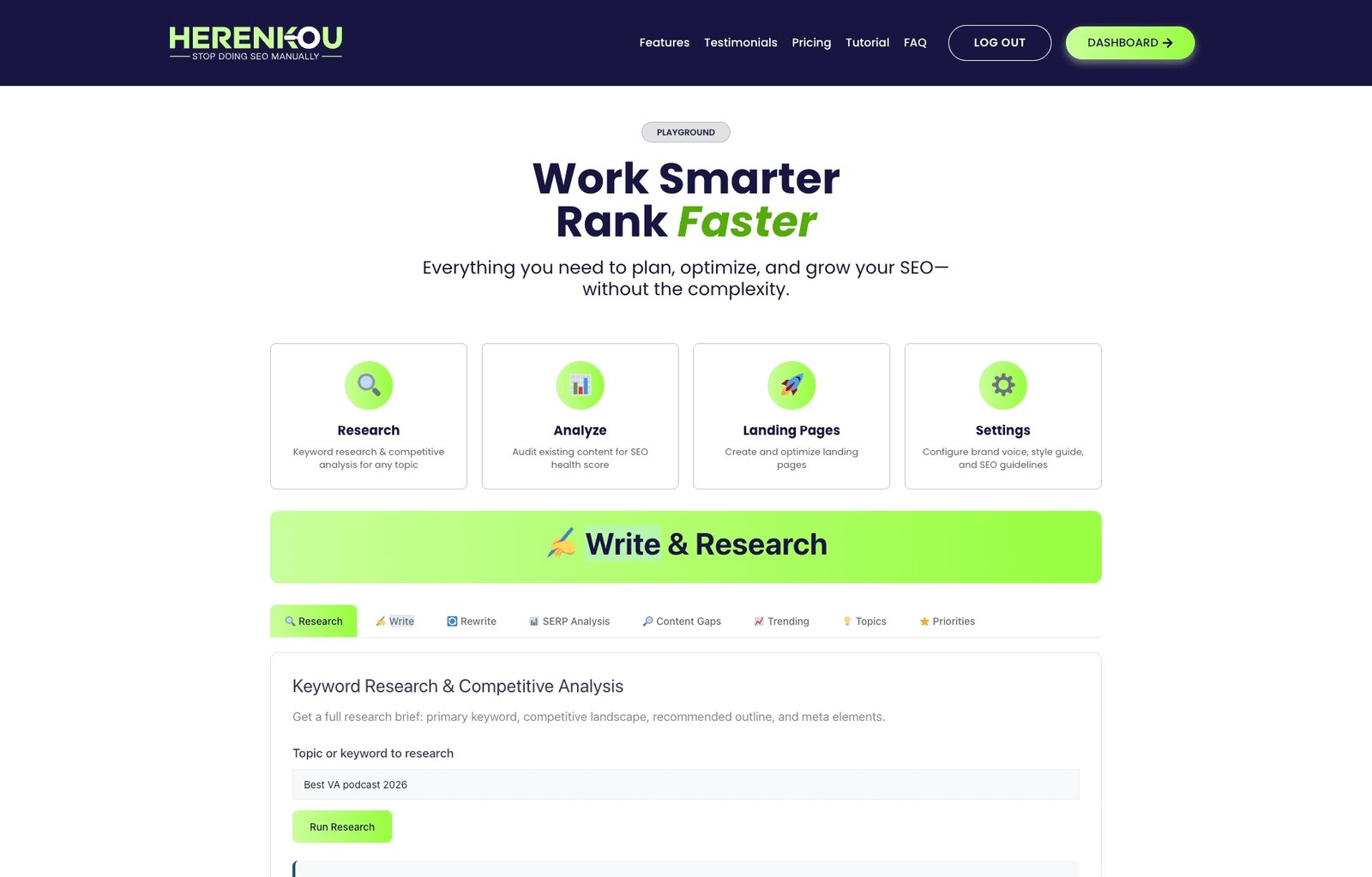
Herenkou is an AI-powered SEO automation platform, designed to replace that chaos with a single repeatable workflow. Rather than a handful of disconnected commands, Herenkou runs on a full SEO feature across the entire content workflow:
Content Research & Analysis:
- Keyword Research & Competitive Analysis
- SERP Analysis
- Competitor Content Gap Analysis
- Trending Topic Opportunities
- Topic Cluster Research
- Content Prioritization Matrix (8-factor opportunity scoring: volume, position, intent, competition, cluster value, CTR, freshness, trend)
- Analyze Existing Content
- Performance-Based Content Review (quick wins, declining content, low-CTR opportunities, high-performers to expand)
Content Creation & Optimization:
- Write SEO Article
- Rewrite & Update Existing Content
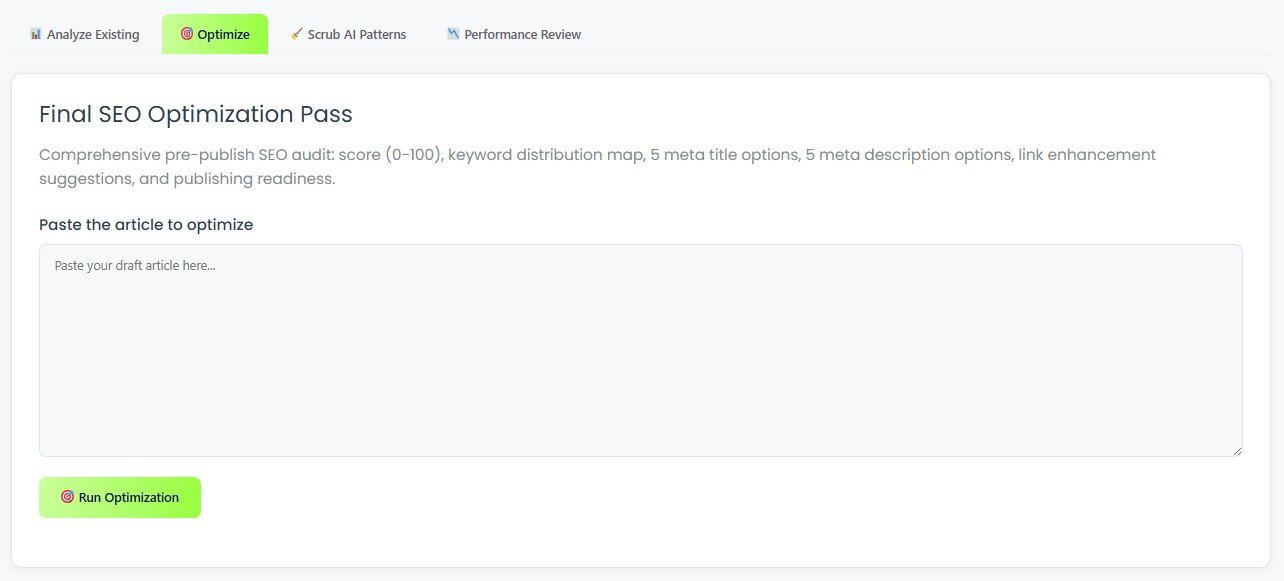
- Final SEO Optimization Pass (0–100 score, keyword distribution map, 5 meta title options, 5 meta description options, link enhancement, publishing readiness)
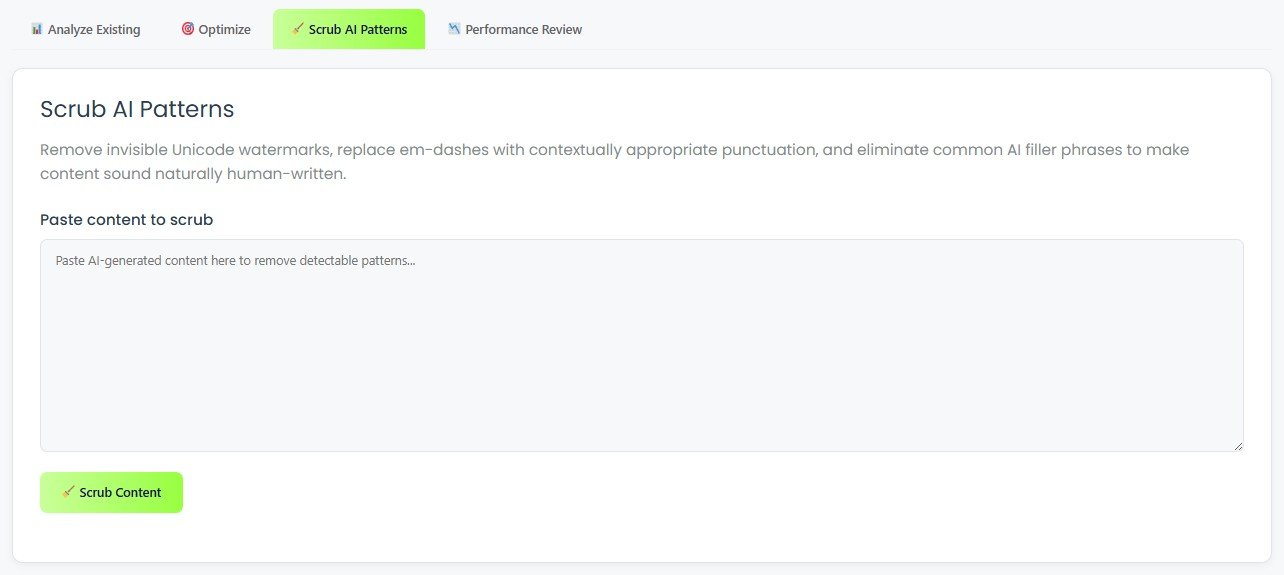
- Scrub AI Patterns (remove Unicode watermarks, replace em-dashes, eliminate AI filler phrases)
Landing Page & Conversion:
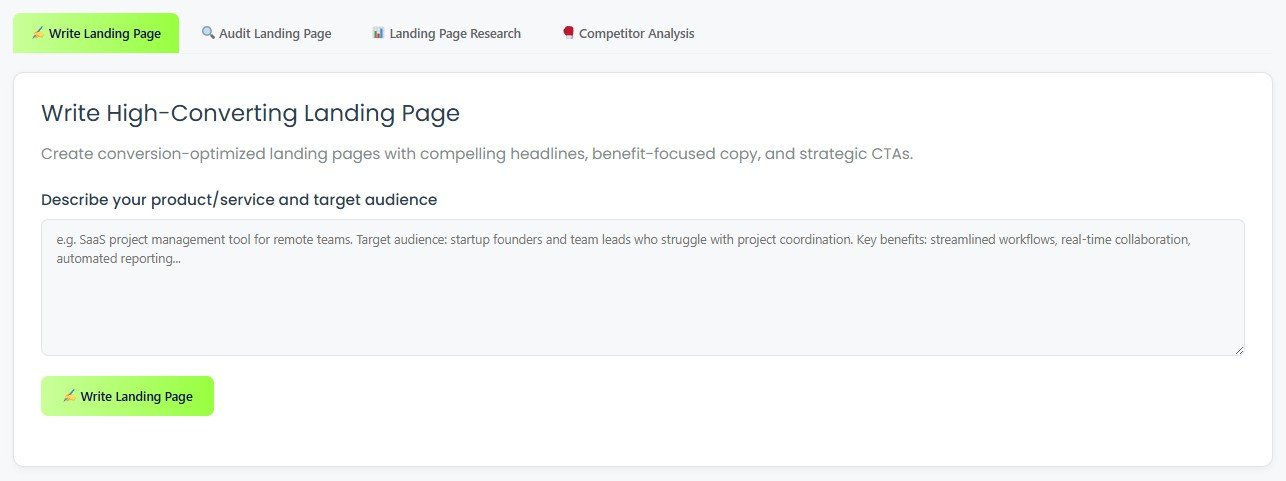
- Write Landing Page (above-fold headline, value proposition, features/benefits, social proof, multiple CTAs)
- Landing Page CRO Audit (0–100 score across 5 dimensions: above-fold, CTAs, trust signals, structure, SEO)
- Landing Page Research (competitor positioning and messaging strategy)
- Deep Competitor Landing Page Analysis (headline effectiveness, value prop, CTA strategy, trust signals, pricing, objections)
All powered by real-time integrations with Google Search Console, Google Analytics 4, Ahrefs, Semrush, and any tracker export.
In this guide, you’ll walk through every stage of that workflow: how Herenkou researches and writes content, how it keeps existing pages competitive, how it strips out robotic AI patterns before anything goes live, and how it extends past blog content into full landing page CRO. By the end, you’ll see exactly why Herenkou isn’t just another SEO tool — it’s the workflow your content strategy has been missing.
What Is Herenkou and How It Works
Herenkou is an AI-powered SEO automation platform built for freelancers, business owners, marketers, and white-label agencies. It consolidates keyword research, content creation, technical audits, conversion optimization, and performance tracking into one intelligent dashboard. Instead of juggling five different tools and spending 10+ hours weekly on manual research, you run a structured sequence of commands and let specialized agents do the heavy lifting.
Think of it as your dedicated SEO and CRO team — minus the agency retainer fees.
The Core Engine:
A Comprehensive SEO Feature Set Built Around Content and Conversion
At the heart of Herenkou is a suite of full SEO full features and one of the key areas are content research & analysis, content creation & optimization, landing page & conversion, and performance tracking. Each command triggers specialized AI agents that execute multi-step work in seconds, and the output of one feature feeds directly into the next.
When you run Keyword Research and Competitor Analysis Herenkou doesn’t just pull keywords. It analyzes your top 10 competitors, identifies content gaps, maps topic clusters, scores content opportunities across 8 factors (volume, position, intent, competition, cluster value, CTR, freshness, trend), and saves a comprehensive research brief — ready for writing.

Why a Comprehensive Feature Set Instead of Basic Content Tools
Most SEO platforms stop at “research, write, optimize.” Herenkou goes further because ranking content and converting visitors are two different problems — and keeping existing content competitive is a third. The research features map opportunity across volume, intent, and competition. The content features handle writing and optimization. The landing page features extend into CRO, and the performance features surface quick wins from your existing traffic data.
This comprehensive approach means every content decision is informed by actual search behavior, competitive positioning, and conversion data rather than guesses.
Data Integrations That Remove the Guesswork
Herenkou connects directly to Google Analytics 4, Google Search Console, and DataForSEO for real-time performance insights. This means every one of the nine steps is grounded in actual traffic and SERP data, not assumptions.
The SEO Machine: Core Features and the Complete Workflow
Herenkou’s SEO Machine organizes every command into four feature categories: content research & analysis, content creation & optimization, landing page & conversion, and performance tracking. Below is exactly how each feature works.
Content Research & Analysis Features
Keyword Research & Competitive Analysis
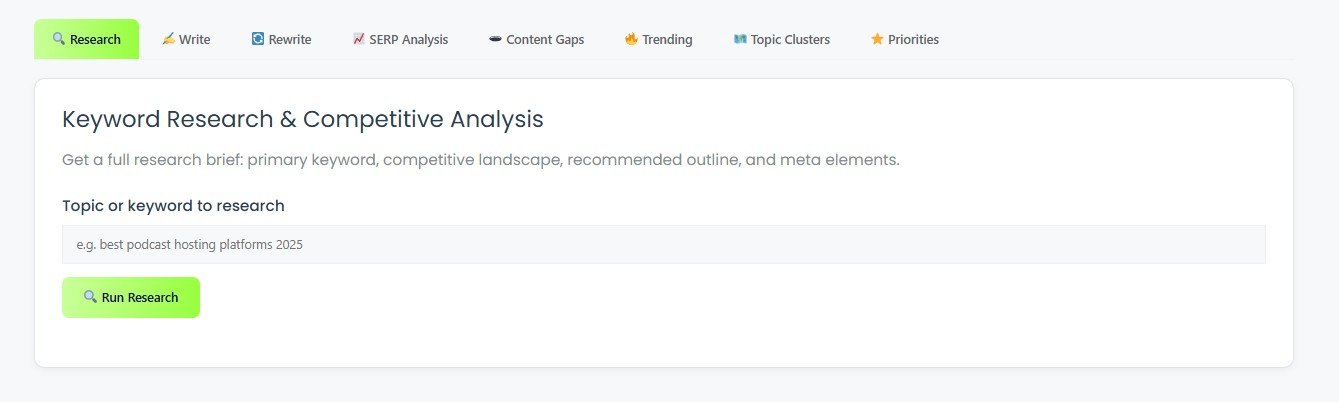
Every strong article begins with data, not assumptions. The feature performs keyword research, analyzes your top 10 competitors, and identifies content gaps before a single sentence is written.
Output: primary and secondary keywords, a full competitor breakdown across the top 10 ranking pages, content gaps and opportunities, a recommended outline, an internal linking strategy, and a preview of meta elements.
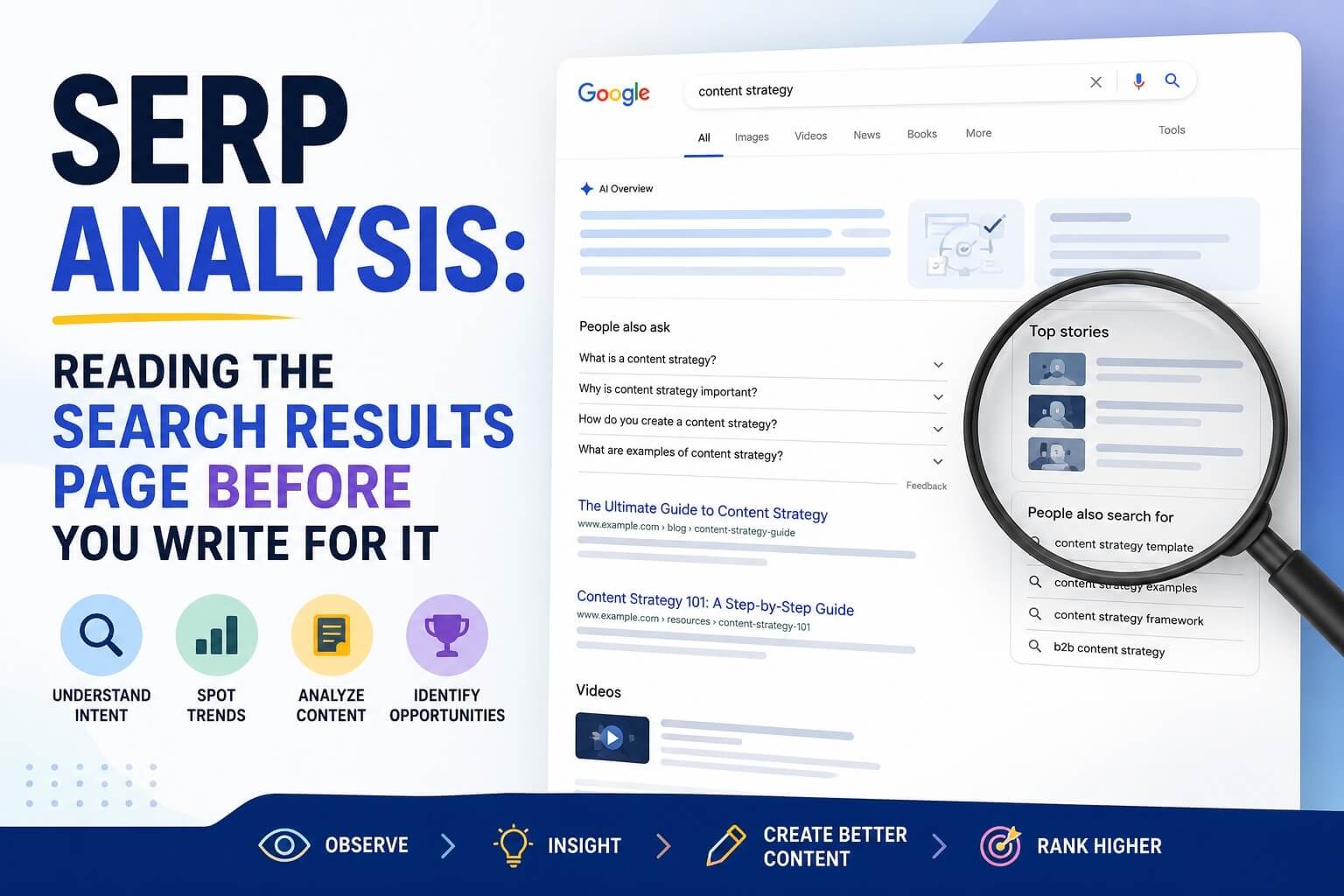
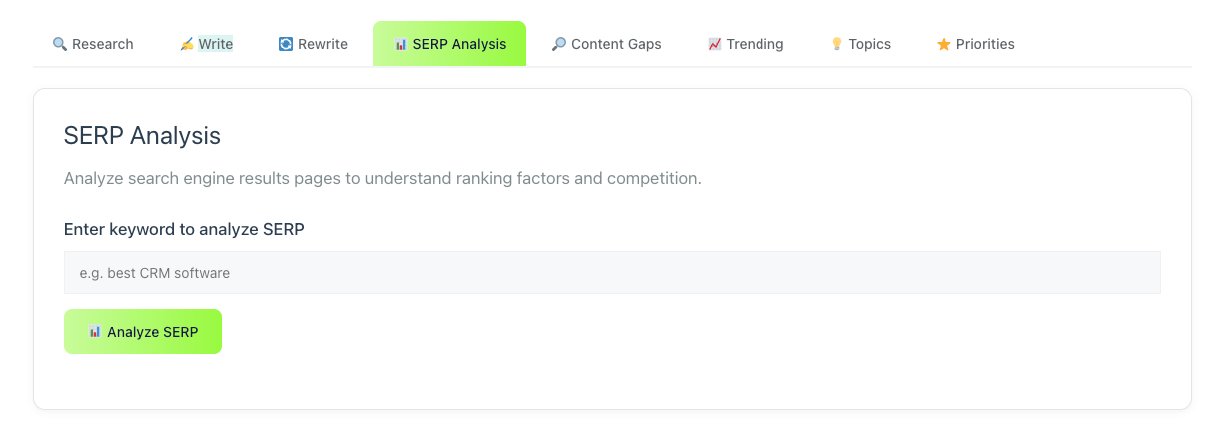
SERP Analysis
The Serp Analysis command runs a deep analysis of the search results page for a target keyword — examining search intent, SERP features (featured snippets, People Also Ask, video carousels), what competitors are doing on the page, and what ranking strategy would actually move the needle.
Competitor Content Gap Analysis
This feature identifies exactly which topics and keywords your competitors are covering that you’re not — and which subtopics you’re addressing that they’ve missed. This feeds directly into your content roadmap.
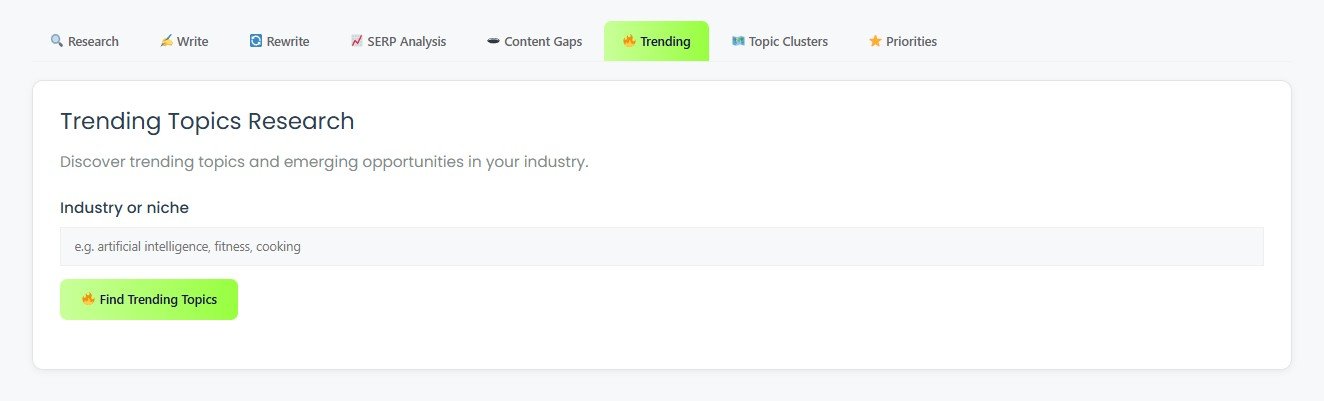
Trending Topic Opportunities
The Trending Topics command surfaces emerging keywords and search patterns before they become competitive, giving you first-mover advantage on new content opportunities.
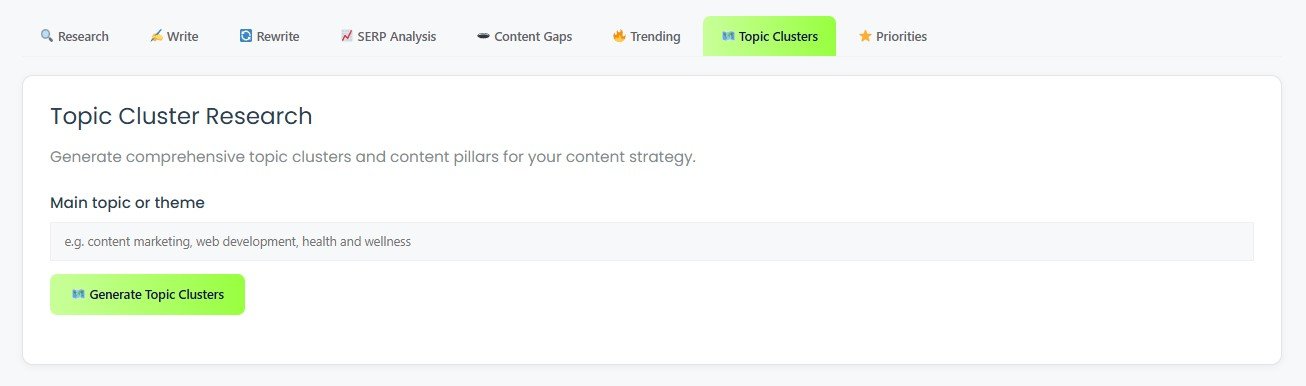
Topic Cluster Research
Map the semantic relationships between your pillar content and cluster topics to build topical authority and internal link structure from the start.
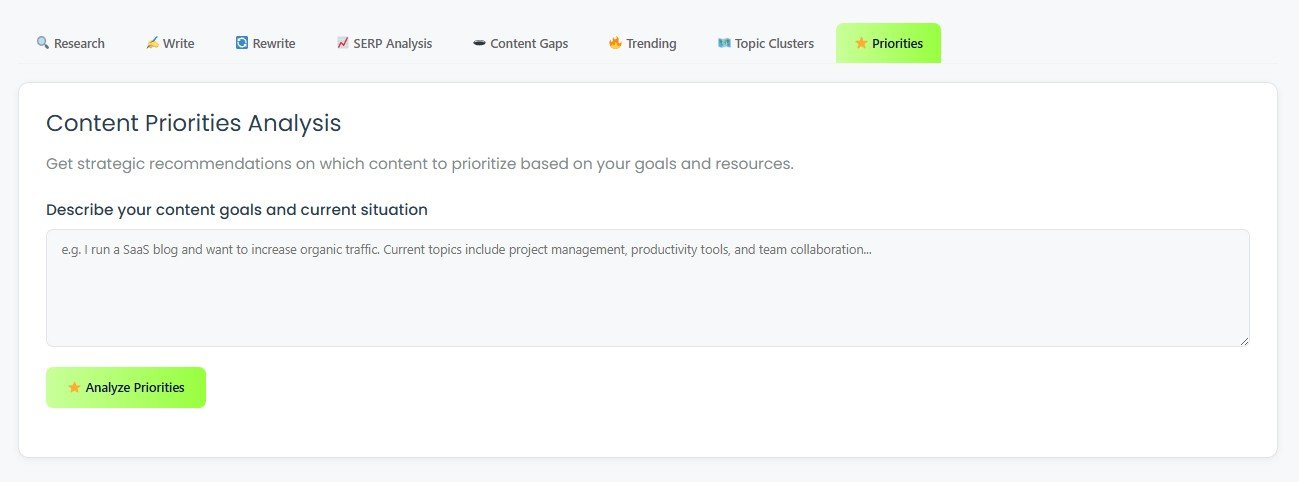
Content Prioritization Matrix
This feature scores every content opportunity across 8 factors: search volume, current ranking position, search intent alignment, competition level, cluster value, estimated CTR, content freshness, and trending status. This produces a ranked priority queue so you’re always working on the highest-ROI topics first.
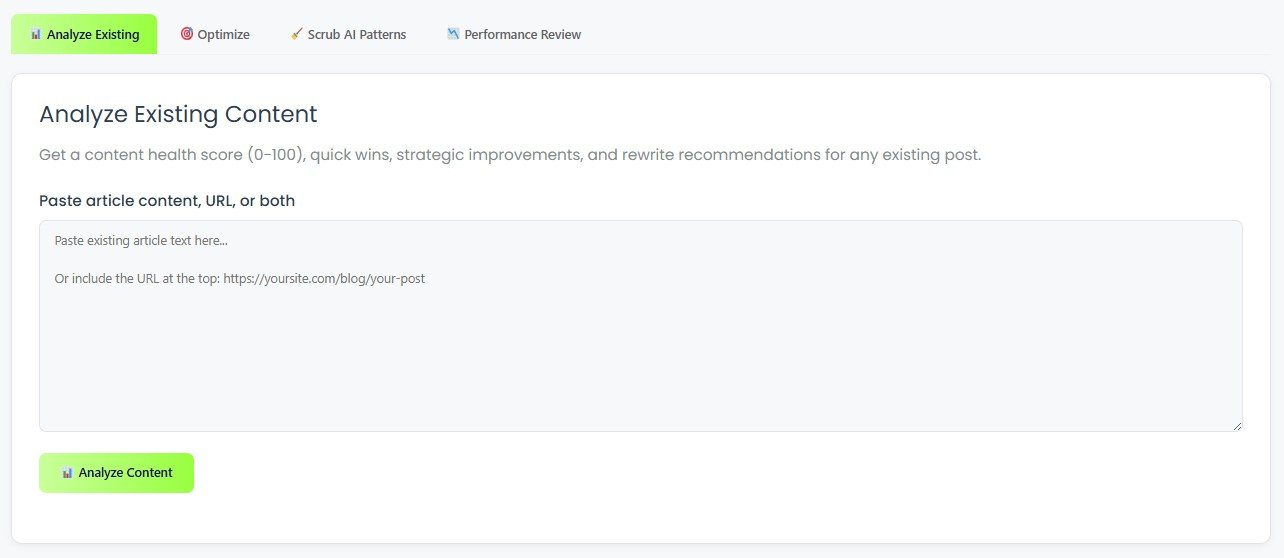
Analyze Existing Content
Before deciding whether to rewrite, this evaluates a live URL or local file and returns a content health score from 0–100, a list of quick wins, longer-term strategic improvements, a rewrite priority recommendation, and a fresh research brief to guide updates.
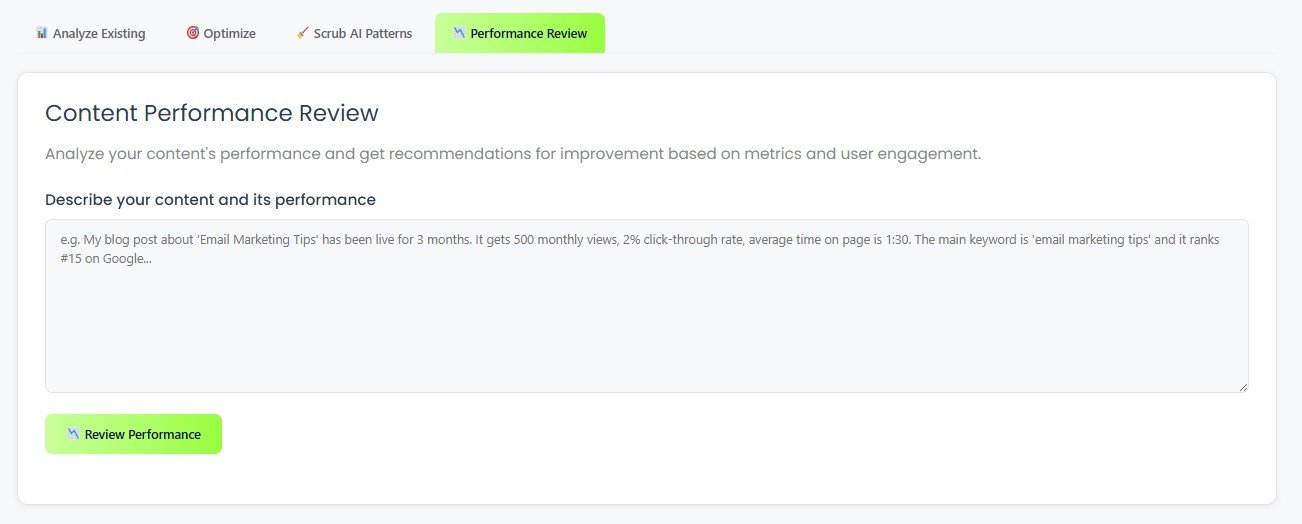
Performance-Based Content Review
This feature integrates directly with Google Search Console, Google Analytics 4, and any tracker export to surface: quick wins (content ranking 11–20 that can reach page one with optimization), declining content (pieces losing rankings), low-CTR opportunities (pages getting impressions but no clicks), and high-performing content ready to expand into cluster topics.
Content Creation & Optimization Features
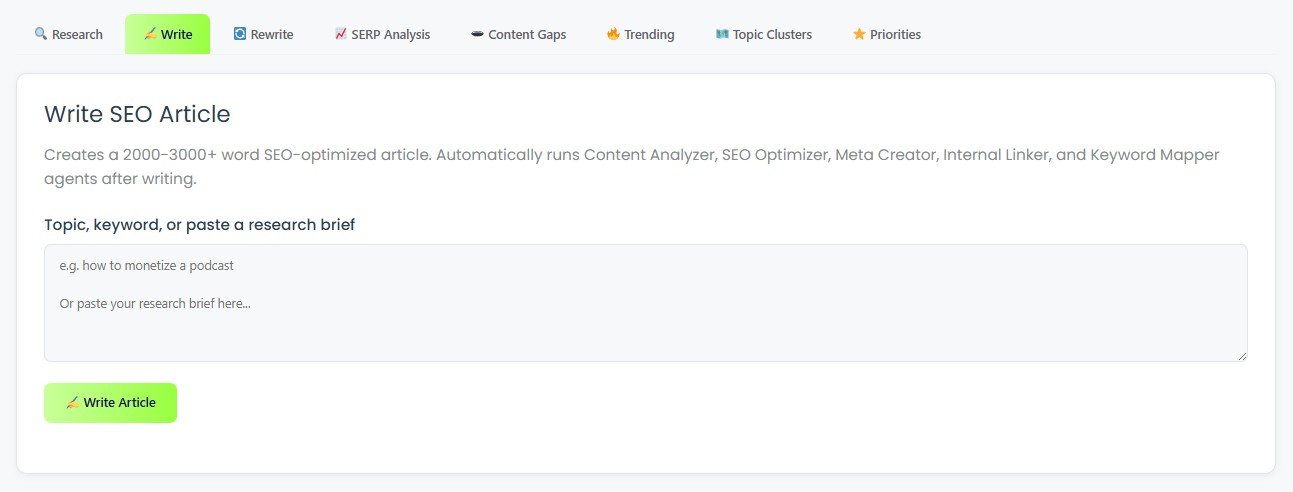
Write SEO Article
Once your research brief exists, this feature transforms it into a 2,000–3,000+ word SEO-optimized article that matches your brand voice from context/brand settings. It integrates keywords naturally, builds in internal and external links, and generates meta title, description, and keyword options automatically.
What makes this powerful is what happens immediately after. Four specialized agents fire automatically: the SEO Optimizer flags on-page improvements, the Meta Creator generates multiple title and description variations, the Internal Linker suggests specific linking opportunities, and the Keyword Mapper audits keyword placement and density across the entire piece.
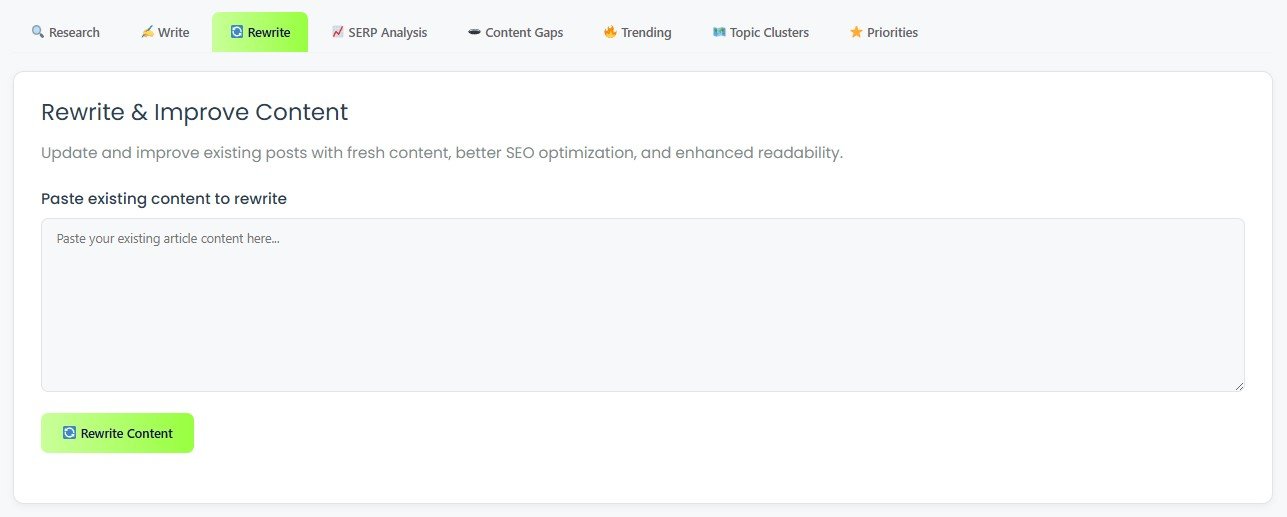
Rewrite & Update Existing Content
This feature updates existing content based on analysis findings — refreshing statistics, filling content gaps competitors are exploiting, improving keyword density, and adding new sections. It preserves what already works and tracks every change made.
Final SEO Optimization Pass
Before anything goes live, this runs a comprehensive SEO audit and returns:
- SEO score from 0–100
- Keyword distribution map across the entire piece
- 5 meta title options
- 5 meta description options
- Link enhancement suggestions
- Publishing readiness assessment
Scrub AI Patterns
Content that reads as obviously AI-generated can hurt trust and engagement. This feature removes telltale AI watermarks: invisible Unicode markers, overused em-dashes, generic filler phrases, and repetitive sentence rhythms. The result reads like it was written by a person, not a model.
Landing Page & Conversion Features
Write Landing Page
Create a conversion-optimized landing page from scratch with above-fold headline, clear value proposition, features/benefits section, social proof (testimonials, case studies, logos), and multiple strategically placed CTAs. All written with conversion psychology built in.
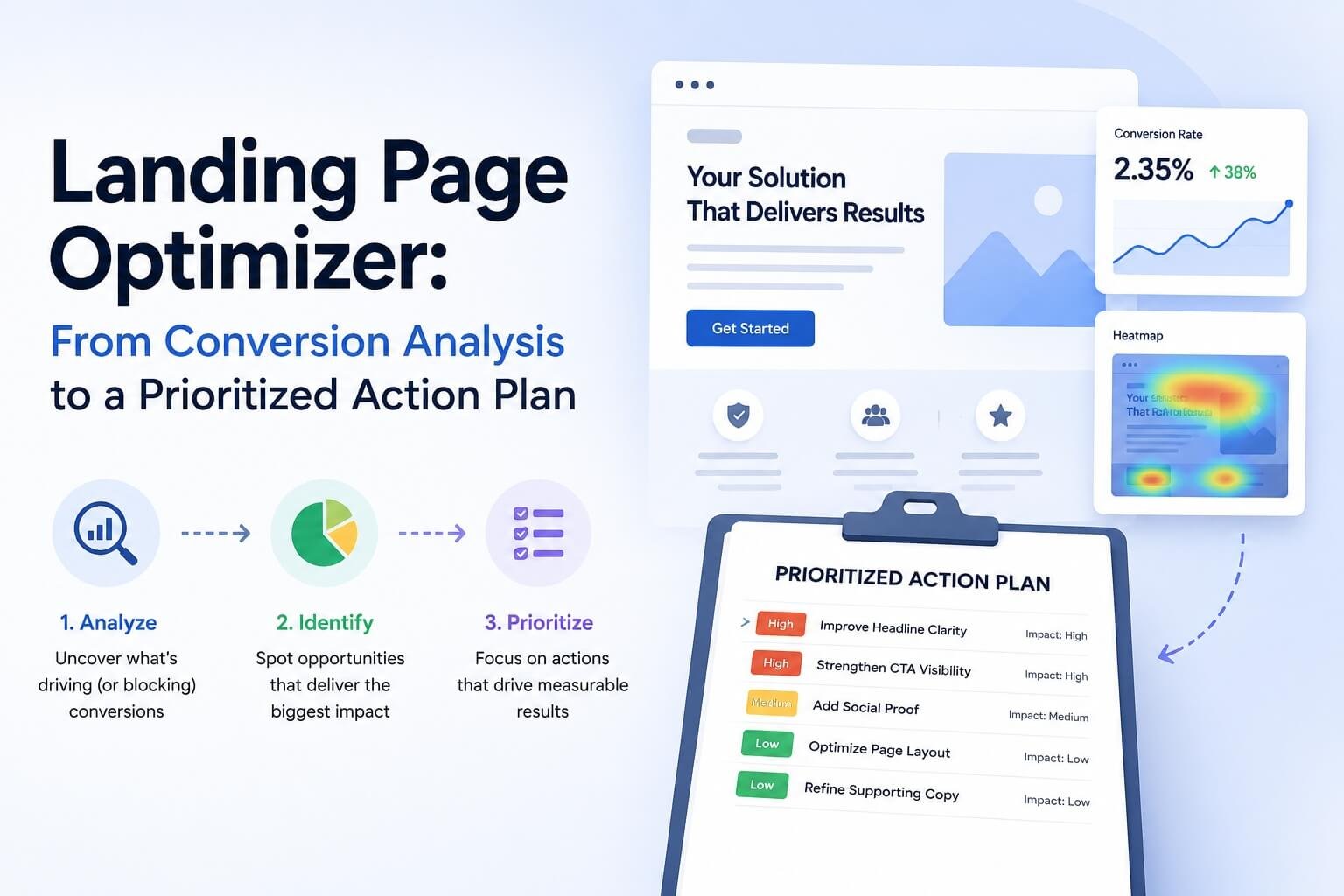
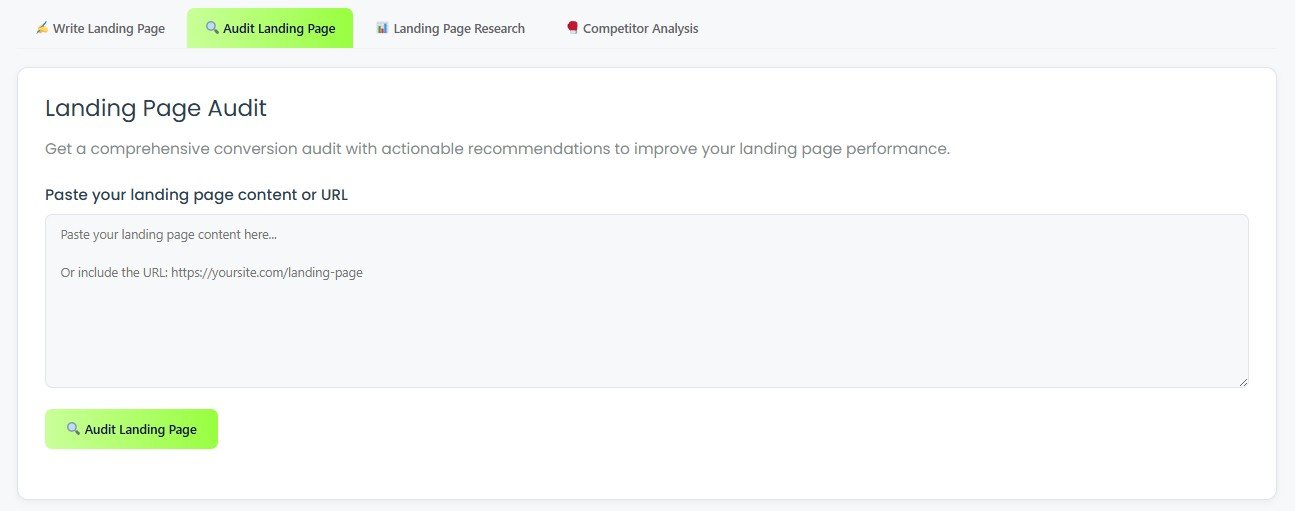
Landing Page CRO Audit
Run a conversion rate optimization analysis on any landing page. This feature scores your page from 0–100 across 5 dimensions:
- Above-the-fold effectiveness
- CTA quality and distribution
- Trust signal presence and prominence
- Page structure and user flow
- SEO readiness
Returns priority improvements ranked by expected impact.
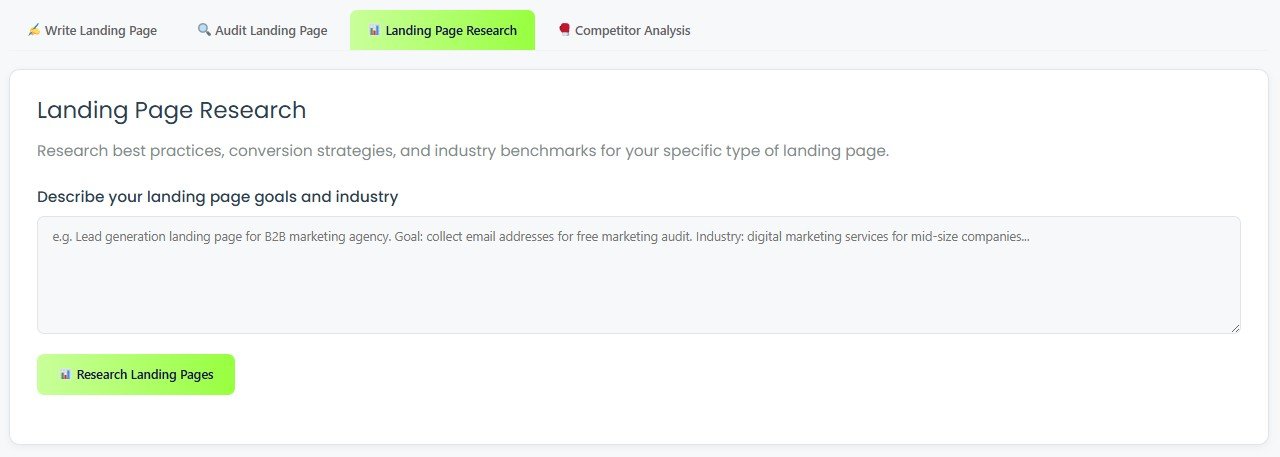
Landing Page Research
Before writing a landing page, this analyzes competitor landing pages in your space: their headlines, value propositions, CTA strategies, trust signals, pricing approach, and objection handling. This informs your messaging strategy before you write.
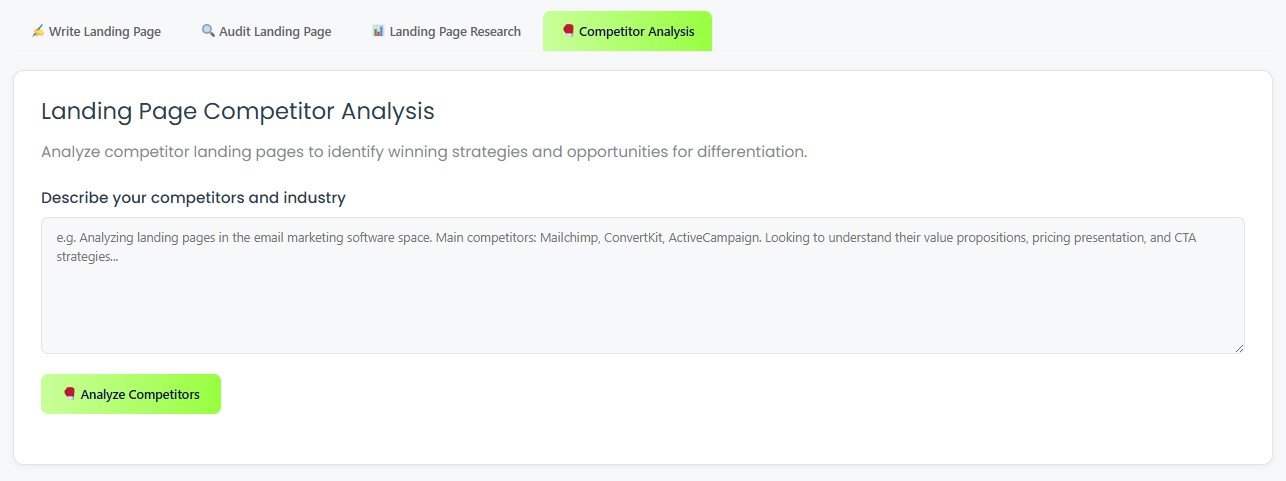
Deep Competitor Landing Page Analysis
This feature performs a forensic breakdown of a specific competitor’s landing page, examining:
- Headline effectiveness and positioning
- Value proposition clarity
- CTA strategy (placement, copy, color, frequency)
- Trust signal strategy (logos, testimonials, certifications, guarantees)
- Pricing and offer structure
- Objection handling
- Conversion element hierarchy
Performance-Based Optimization
All features integrate with Google Search Console, Google Analytics 4, Ahrefs, Semrush, or any tracker export. This means every research decision, every content update, and every CRO recommendation is grounded in actual traffic data, not assumptions.
Workflow: Creating New Content End-to-End
For a brand-new article, the typical workflow runs in this order:
- Content Research & Analysis —Use research to map competitors and keyword opportunity, content prioritization to score the opportunity, and optionally serp analysis to confirm search intent
- Content Creation — Use write to produce the full draft, which automatically triggers the SEO Optimizer, Meta Creator, Internal Linker, and Keyword Mapper
- Content Optimization — Use optimize for a comprehensive pre-publish SEO audit, then scrub to remove AI patterns
- Publishing & Monitoring — Publish and monitor with performance review to surface optimization opportunities as real traffic data arrives
If that article links to a landing page, the Landing Page & Conversion features run on the destination page to ensure traffic converts once it arrives.
Workflow: Updating Existing Content
Your best SEO opportunity is often the content you published 18 months ago that’s slowly slipping from page one. The workflow for existing content runs in this order:
- Performance Analysis — Use performance review to surface quick wins, declining content, and low-CTR opportunities from your Google Search Console and Analytics data
- Diagnosis — Use analyze existing on the target URL to get a content health score, competitive positioning, and rewrite priority
- Targeted Updating — Use rewrite to refresh statistics, fill content gaps, and improve keyword clustering based on the analysis
- Final Optimization — Use optimize and scrub before republishing
- Monitoring — Track ranking movement and traffic recovery over the following 4–8 weeks
Why This Beats Manual Content Audits
Most freelancers and business owners audit content by gut feel — scanning for obvious errors and calling it done. Herenkou combines Google Search Console performance data with real-time competitor analysis via DataForSEO and Semrush, giving you evidence-based priorities instead of guesses. If you’re sitting on a library of blog posts from the past two years, start with a performance review — it surfaces which existing pieces have the highest update ROI before you invest time rewriting anything.
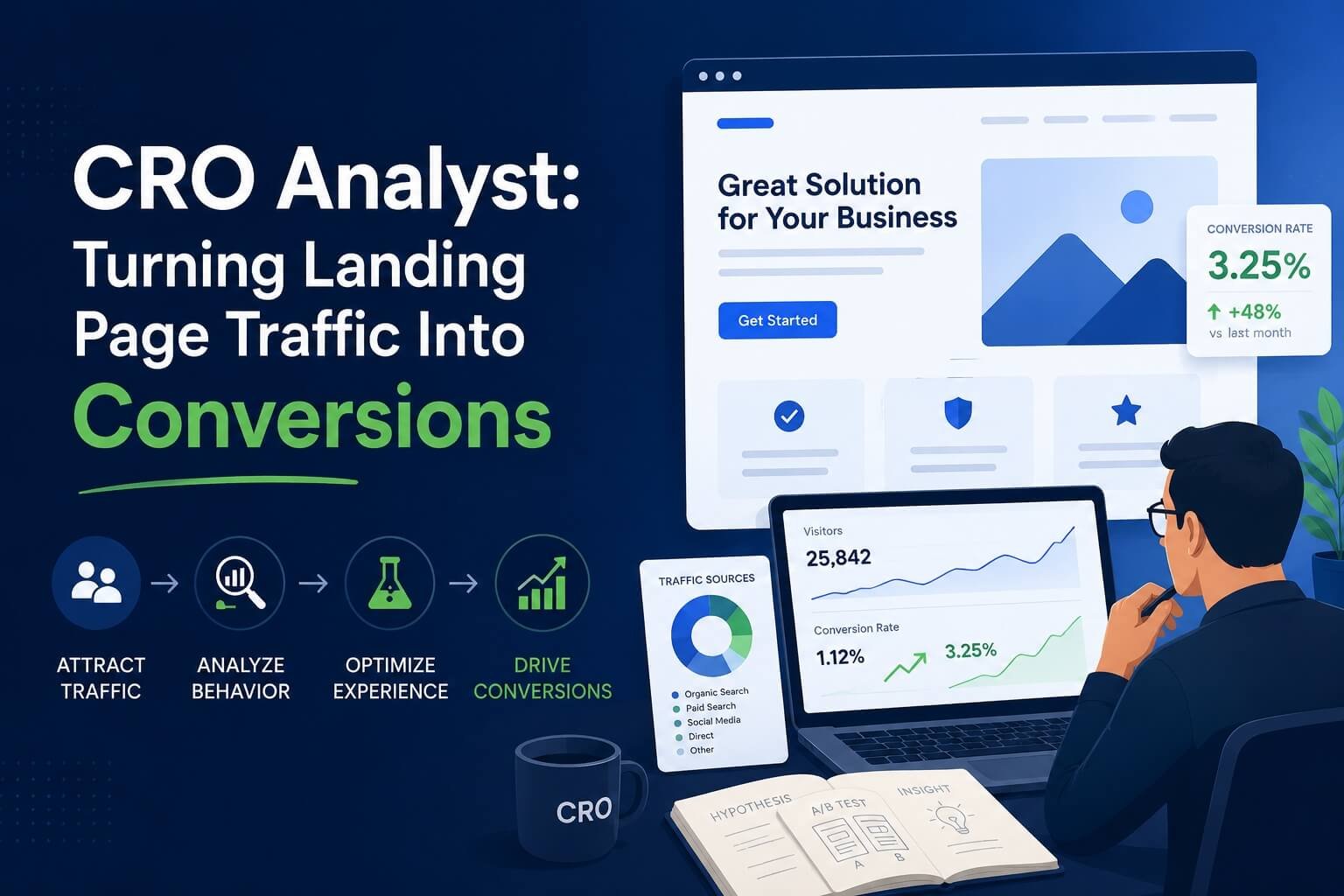
Workflow: Converting Blog Traffic into Landing Page Conversions
Once people land from your blog content, the Landing Page & Conversion features take over:
- Landing Page Research — Use landing page research to analyze competitor landing pages and messaging strategy
- Landing Page Creation — Use write landing page to create a conversion-optimized page with strategic CTAs and trust signals
- CRO Audit — Run /cro-audit to score the page (0–100) across above-fold, CTAs, trust signals, structure, and SEO
- Competitor Analysis — Optionally use analyze competitorlanding page on your top competitor’s page to identify gaps in your approach
- Continuous Optimization — Monitor conversion rate and use CRO recommendations to A/B test improvements
Data Integrations That Power All Nine Steps
Making content decisions based on gut feel is a fast track to wasted effort. Herenkou’s data integrations pull real performance metrics directly into the workflow, so every one of the nine steps is backed by actual numbers.
Google Analytics 4 + Search Console: Your Content’s Report Card
The GA4 and Search Console integrations show which pages drive organic traffic, which keywords trigger impressions without clicks, and where users drop off before converting. When Search Console shows a page ranking on page two for a high-volume keyword, that’s your signal to run Step 4 (analyze existing) and close the gap.
DataForSEO: Real-Time Competitive Intelligence
The DataForSEO integration powers Steps 1 and 9. When you use research or serp analysis, DataForSEO pulls live SERP data, competitor keyword rankings, and search volume metrics in real time — not cached data that’s three months old.
The SEO and CRO Advantage You've Been Missing
Ranking on Google — and converting once people arrive — doesn’t have to mean drowning in spreadsheets, switching between a dozen tools, or guessing what content will perform. Herenkou’s comprehensive SEO feature set changes that equation entirely.
Here’s what makes this system genuinely different:
- Unified research & analysis — Keyword research, SERP analysis, competitor gap analysis, trending topics, topic clusters, and content prioritization all in one workflow
- Specialized AI agents handle SEO auditing, meta creation, internal linking, and keyword mapping automatically after every write
- AI-pattern scrubbing ensures content reads like it was written by a person, not flagged as machine-generated
- Conversion-first landing page features — not just page builders, but research, CRO audits, and competitor analysis specifically designed to convert
- Performance-based prioritization — Google Search Console, Analytics, Ahrefs, and Semrush integrations surface quick wins and opportunities automatically
- Content updating is just as powerful as creating new content, with analysis and rewrite features protecting your existing rankings
- 8-factor opportunity scoring (volume, position, intent, competition, cluster value, CTR, freshness, trend) removes guesswork from priority decisions
Your next three moves:
- Connect your Google Search Console to unlock performance review on existing content
- Use research on your highest-priority topic
- Let write generate your first fully optimized draft, then scrub before publishing